OpenAI adds ChatGPT Health for medical questions

Add Axios as your preferred source to
see more of our stories on Google.
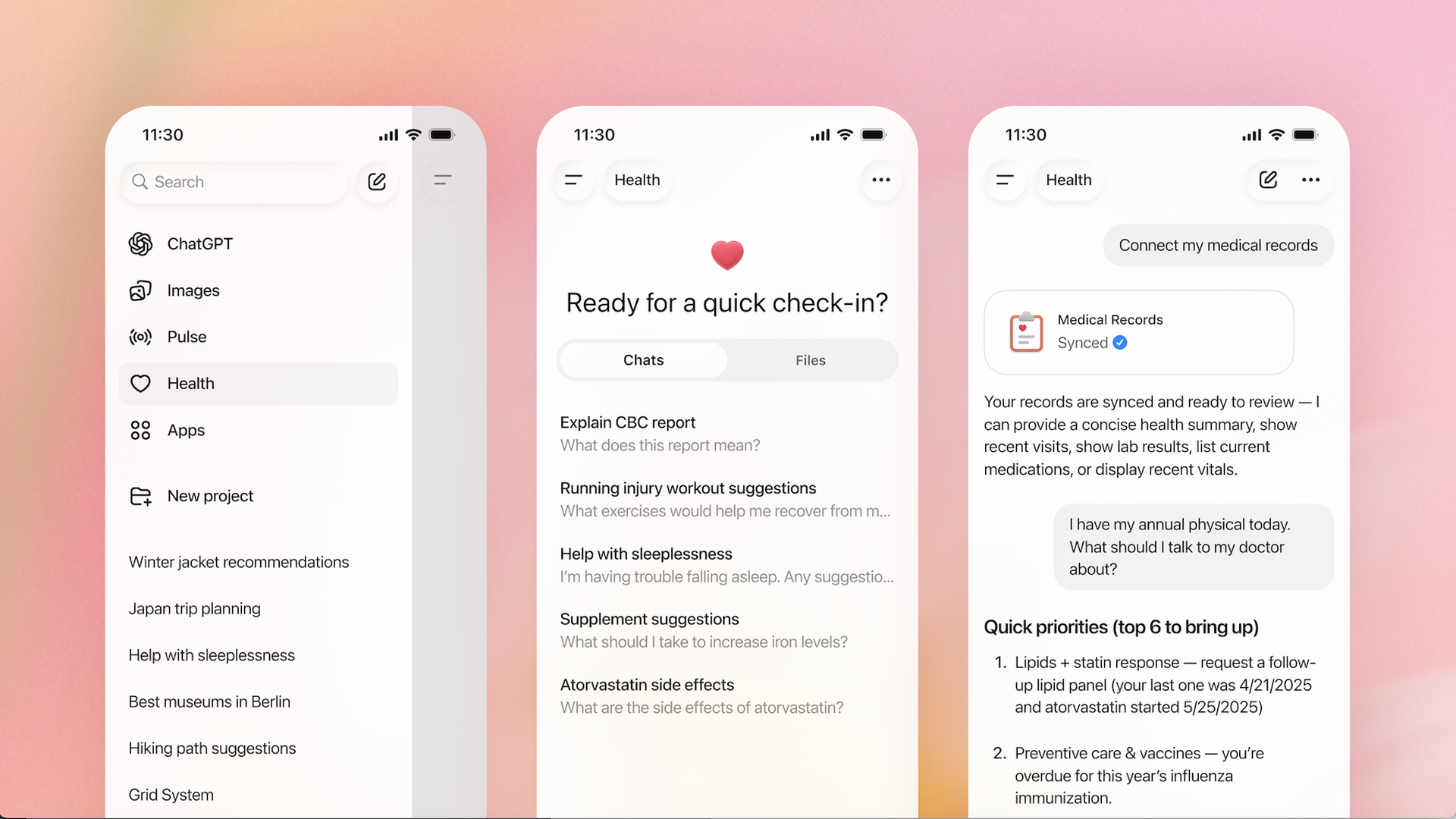
ChatGPT Health. Credit: OpenAI
OpenAI is expanding its capabilities by adding a dedicated health tab to ChatGPT, allowing people to bring in electronic medical records and other data from apps like Apple Health and MyFitnessPal.
Why it matters: Seeking answers for health-related queries is already a top use of ChatGPT, with more than 40 million people using it daily for medical and health insurance questions.
- Even before the introduction of the dedicated tab, people have been flocking to ChatGPT to make sense of lab tests, navigate health insurance claims and figure out what is causing various symptoms.
Driving the news: The new feature, dubbed ChatGPT Health, aims to expand on what's already being done in chats by allowing users to connect to other apps and data sources.
- OpenAI says that information shared in the health tab won't be used in other types of chats and that people can easily view and delete their health-related "memories."
- A small group will test the feature first. Those interested in access to the health features can sign up for a waitlist, while OpenAI says it plans to make the health tab available to all users on the web and iOS in the coming weeks.
The big picture: OpenAI says it's trying to address a world in which people have lots of data from medical devices, fitness trackers and electronic health records, but often struggle to make sense of the information.
- Meanwhile, ChatGPT is available 24/7 while doctors typically have only a few minutes to spend with a patient in any given visit.
What they're saying: AI doesn't replace medical care, but can play an important role in helping people navigate a complicated health care system, OpenAI CEO of Applications Fidji Simo said Wednesday on a call with reporters.
- "It's great at synthesizing large amounts of information," Simo said. "It has infinite time to research and explain things. It can put every question in the context of your entire medical history."
Between the lines: Privacy is obviously a big issue when it comes to health data. The company says it won't use user data to train its models and there remains the option to use temporary chat so the information won't be stored.
Yes, but: Like other information shared with ChatGPT, health information could potentially be made available to litigants or government agencies via a subpoena or other court order.
- That seems particularly noteworthy at a time when access to reproductive health care and gender affirming care are under threat at both the state and federal levels.
- User data could get swept up in other ways too. As part of their copyright battle against OpenAI, news organizations have obtained access to millions of ChatGPT logs, including from temporary chats that were meant to be deleted after 30 days.
- Sam Altman has called for some sort of legal privilege to protect sensitive health and legal information.
What to watch: OpenAI said it has more health features on its road map and will talk soon about additional work with various health care systems.
